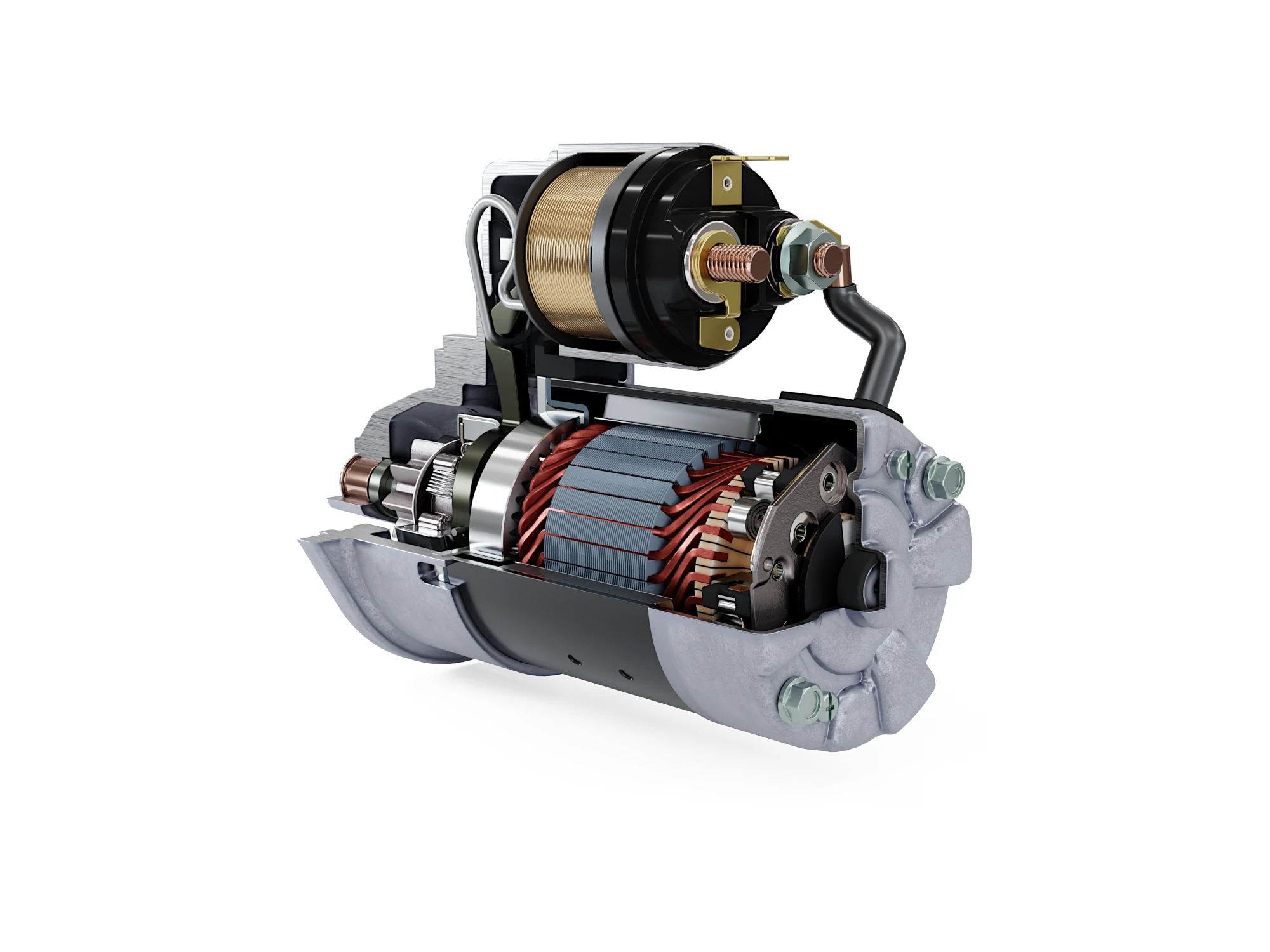
Revealing Hidden Systems & Intricate Internal Engineering
Showing the interior components of an engine block requires destructive physical sawing. Indeed, this outdated method destroys valuable prototypes and leaves rough, unpolished metal edges.
In contrast, digital rendering utilizes mathematical plane-clipping technology. This methodology cuts components cleanly, creating perfect cross-sections and cutaway models instantly.
Invisible forces like thermal currents or internal airflow patterns escape standard lenses. Furthermore, trying to photograph these phenomena requires expensive, specialized laboratory environments.
However, a digital studio maps particle flows directly to your geometry. This option provides exceptional clarity for complex 3D rendering projects.
Dense mechanical systems look cluttered when viewed as a singular unit. Consequently, prospective buyers fail to grasp the purpose of underlying sub-assemblies.
A virtual environment solves this by adjusting specific material transparency profiles. Therefore, you can highlight individual internal tracks during your complex 3D visualization cycles.
Simplifying Complex Systems & Enhancing Operational Content
B2B clients require comprehensive maintenance and training documentation layouts. Instead of managing tedious hand-drawn technical sketches, you can generate cinematic asset expansions.
My pipeline pulls components apart along precise vector lines. This infrastructure delivers high-clarity exploded-view renderings for complex product portfolios.
Capturing wear and tear or micro-structural transformations over time is highly impractical. For example, physical test units take months to degrade under heavy usage profiles.
Instead, digital material nodes allow you to instantly visualize stress boundaries. This programmatic agility improves the analytical value of your ongoing material visualization loops.
Standard macro lenses blur structural context when zooming tightly into micro-components. This constraint limits your presentation clarity during large-scale enterprise visual rollouts.
Virtual viewports offer infinite zoom capacities with pixel-perfect edge crispness. Consequently, this precision expands your digital footprint while supporting long-term global scalability pipelines.